
4 min read
The Price I Did Not Dare to Ask
I told every client I was using AI, and not one of them questioned the price. The discount was entirely mine. It came from a feeling I can name exactly: it felt like cheating.
pricingai-systems
Essays, playbooks, and measured findings on building with AI, running agencies, and how work actually gets done - plus personal stories and the opinions I will defend. Much of it published here first, and all of it open.
I told every client I was using AI, and not one of them questioned the price. The discount was entirely mine. It came from a feeling I can name exactly: it felt like cheating.

In September Claude handed me a post and said it had been checked. The first word was 'Most'. That word is on a list of seventy-three I keep, and the tool that called the draft clean had not run the check. This is the system I built after that, and the two things it still cannot see.

I ran an agency of thirty people and never shipped as much in a year as I ship now in a quarter, alone. The naive explanation is that AI writes code fast. That is true, and it misses the point the way 'a car is a fast horse' misses the point. Typing was never the bottleneck of a one-person operation. Everything else was.

On the first day of a five-week build, I did not build anything. I read the client's first version, ran it, and wrote down where it stood. The report went to them before any new code did. It is the cheapest day of the project and the only deliverable that stays theirs whatever happens next.
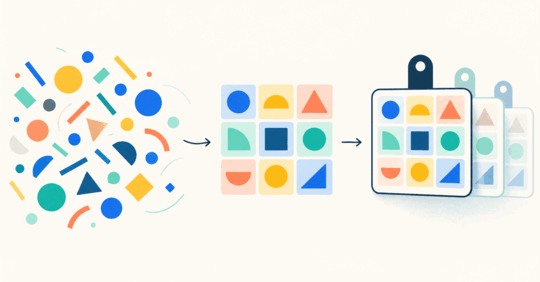
For twelve years my agency ran the same check on every brief before we quoted. It caught the projects that would have hurt us. It never had a name, so nobody outside the building could ask for it, repeat it, or pay for it on its own. The check was real. Without a name it was invisible.

Every agency owner I talk to about AI gets to the same question within ten minutes: which tools should we buy? It is the wrong question, and one sentence shows why. Your competitor can buy the same tools. The thing they cannot buy has been piling up on your server for ten years.

A few years ago, if you had told me I would be co-building a coaching program for agencies, I would have been polite about it and changed the subject. What changed my mind was noticing the gap between the methodology coaches sell and the methodology they actually use, and meeting a partner whose background is the exact opposite of mine. Software refuses to accept fuzzy. That refusal turns out to be the whole point.

The normal way to build a coaching business is methodology first, platform later, as delivery infrastructure. We are doing the opposite: the methodology and the software are emerging together, and each one refuses to accept the other's vagueness. Eight months in, the work has taught us what the methodology actually is, and why an operating environment is a different category of product than a course.

Ask what the most valuable system in an agency is and you will hear about the CRM, the project tool, the pipeline. Ask what actually runs the place and the honest answer is a skull. The standards, the client history, the judgment, the memory of what was decided: all of it commutes to the office inside one person. Twenty years of fixes failed to move it. I think I finally understand why, and what moves it instead.

A full novel runs 500k to 900k characters. At cloud TTS pricing of roughly $100 per million characters, narrating your bookshelf is a serious invoice. The interesting part is that the math has quietly changed: open-source voice models now run on a consumer GPU, clone a voice from a short sample with zero training, and cost only electricity. So I built the proof.
I write regularly on LinkedIn about what I'm building and learning: agency growth, AI development, product judgment, and the messy reality behind making things work.
Follow on LinkedIn